
What Qualifications Do You Need to Become a Dental Nurse in the UK?
Dental nursing is a professional healthcare career that combines practical clinical support, patient care, teamwork and dental knowledge. Dental nurses work closely with dentists and other dental professionals, helping to prepare the surgery, support patients, maintain infection control and assist during treatment.
If you are thinking about becoming a dental nurse in the UK, one of the first questions you may ask is: what qualifications do I need?
The answer is that to become a fully qualified dental nurse, you need to complete a recognised dental nursing qualification that leads towards registration with the General Dental Council. You also need practical experience in a dental setting, professional standards and the ability to work safely with patients.
North London Dental Centre provides dental nurse training in London and offers a route for students who want to begin their career in dental nursing.
Do You Need Previous Dental Experience?
Many people are surprised to learn that previous dental experience is not always necessary before starting your journey.
Some students begin dental nursing after leaving school or college. Others start after working in retail, hospitality, childcare, care work, administration, customer service or another completely different field.
What matters is that you are willing to learn, reliable, professional and interested in patient care. Dental knowledge can be developed through training and workplace experience.
If you are new to dentistry, the right course can help you understand the foundations of the profession and build confidence step by step.
The Main Qualification: Level 3 Diploma in Dental Nursing
One of the most common qualifications for aspiring dental nurses is the Level 3 Diploma in Dental Nursing.
This qualification is designed to teach the core knowledge and practical understanding needed to work safely in a dental environment. It usually combines theoretical learning with practical workplace experience.
North London Dental Centre offers the Level 3 Diploma in Dental Nursing, accredited by the National Examining Board for Dental Nurses. This qualification is designed to help students progress towards registration with the General Dental Council after successful completion.
The course covers the foundations of dental nursing and helps students develop the knowledge, skills and professional attributes needed for the role.
Why NEBDN Accreditation Matters
The National Examining Board for Dental Nurses is a leading awarding organisation for dental nursing qualifications in the UK.
Choosing an NEBDN-accredited course can give students confidence that their training follows recognised standards. This is important because dental nursing is a regulated profession, and the qualification you complete must support your route to registration.
A recognised qualification is not simply a certificate. It is evidence that you have completed structured learning and assessment in the areas needed to work safely as a dental nurse.
Why GDC Registration Matters
The General Dental Council is the regulator for dental professionals in the UK. Dental nurses must be registered with the GDC before they can work as qualified dental nurses.
This means that completing a recognised qualification is only part of the journey. Once you have successfully completed your training, you will need to apply for GDC registration and meet the registration requirements.
Registration confirms that you are recognised as a dental professional and are expected to follow the professional standards required by the regulator.
This is an important milestone in your dental nursing career.
Can You Work as a Trainee Dental Nurse First?
Many people enter dental nursing by working as a trainee dental nurse while studying towards a recognised qualification.
This route allows you to gain practical experience in a real dental practice while learning the theory through your course. This can be a strong option because dental nursing is a practical role. You need to understand how the dental surgery works, how to support the dentist, how to reassure patients and how to follow safe procedures.
However, trainee dental nurses must take training seriously. From 1 June 2026, new trainee dental nurses are expected to start a recognised training programme within 12 months of starting work.
This means that if you begin working as a trainee dental nurse, you should plan your formal training early rather than delaying it.
Practical Experience Is Essential
Dental nursing cannot be learned from books alone. Practical experience is essential because the role involves chairside support, patient communication, infection control, instrument handling and teamwork.
In practice, a trainee dental nurse learns how to prepare the surgery, pass instruments, mix materials, maintain cleanliness, follow health and safety procedures, support nervous patients and assist during different types of treatment.
This practical experience helps students connect theory with real dental care.
North London Dental Centre helps students with employment while they are on the course, which can be particularly useful for people who need to gain dental practice experience while training.
What Will You Learn During Dental Nurse Training?
A dental nursing qualification should help you understand the key areas of dental practice.
This may include dental anatomy, oral health, dental diseases, infection prevention, patient care, medical emergencies, dental materials, radiography awareness, record keeping, safeguarding, health and safety, communication, professionalism and teamwork.
Students also learn about different dental treatments and how to support the dental team during procedures.
The goal is not simply to pass exams. The goal is to become a safe, confident and professional dental nurse who understands both patient care and clinical responsibility.
What Personal Skills Do You Need?
Qualifications are important, but dental nursing also requires the right personal qualities.
Dental nurses should be organised, calm, caring, reliable and able to work well under pressure. They need good communication skills because patients may be nervous, confused or uncomfortable.
Attention to detail is also important. Dental nurses must follow infection control procedures, prepare the correct equipment, record information accurately and support the dentist safely.
Teamwork is essential because dental care depends on the whole dental team working together.
If you already have experience in customer service, care work, childcare, hospitality or administration, you may have transferable skills that can help you succeed in dental nursing.
Do You Need GCSEs?
Entry requirements can vary depending on the course provider and training route. Some courses may ask for GCSEs or equivalent qualifications, particularly in English, maths or science. Other providers may consider applicants based on suitability, experience, attitude and ability to complete the course.
Because requirements can differ, it is important to check directly with the training provider before applying.
If you are unsure whether your current qualifications are enough, you should speak to North London Dental Centre. Their team can explain the entry requirements for their dental nursing course and advise on the next step.
Do You Need to Be Working in a Dental Practice?
For many dental nursing courses, practical workplace experience is required. This is because students need to demonstrate competence in real dental settings.
If you are already working as a trainee dental nurse, your workplace experience can support your training. If you are not yet working in a dental practice, you may need help finding suitable employment or placement opportunities.
North London Dental Centre supports students with employment while they are on the course. This can be especially useful for learners who are new to dental nursing and need practical experience alongside their studies.
How Long Does It Take to Qualify?
The time needed to qualify can depend on the course structure, your study route, your workplace experience and how quickly you complete the required assessments.
Dental nursing requires commitment. You need to attend training, complete assignments, gain practical experience, keep records and prepare for assessments.
Rather than focusing only on speed, students should focus on becoming competent and confident. Dental nursing is a healthcare role, and patient safety must come first.
What Happens After You Qualify?
After successfully completing a recognised dental nursing qualification, the next step is usually to apply for registration with the General Dental Council.
Once registered, you can work as a qualified dental nurse in the UK. You will also need to maintain your professional registration, follow the standards expected of dental professionals and continue developing your knowledge.
Qualification can also open the door to future career development. Dental nurses may move into senior dental nursing, practice management, treatment coordination, orthodontic nursing, implant nursing, sedation nursing, oral surgery support, radiography qualifications, tutoring, assessing or other roles within the dental industry.
Can Dental Nursing Lead to Other Careers?
Yes. Dental nursing can be the foundation for further opportunities.
Some dental nurses stay in practice and become senior members of the clinical team. Others move into specialist areas. Some later progress towards dental hygiene, dental therapy, practice management, education or recruitment.
This makes dental nursing an attractive choice for people who want to enter healthcare and keep future options open.
A recognised qualification can be the first step towards a longer career in dentistry.
Why Choose North London Dental Centre?
North London Dental Centre is a dental nurse training and recruitment provider based in London. It is an NEBDN-accredited training centre and offers the Level 3 Diploma in Dental Nursing.
Their course is designed by practising GDC registrants with many years of experience. Students are assigned a personal tutor, and the course focuses on helping learners understand the foundations of dental nursing, teamwork and professional practice.
North London Dental Centre also helps with employment while students are on the course, which can be a major advantage for people who need practical experience in a dental setting.
For anyone who wants to become a qualified dental nurse in London, NLDC offers a practical route into the profession.
Is Dental Nursing Right for You?
Dental nursing may be right for you if you want a healthcare career, enjoy helping people, like practical work and want to be part of a professional team.
It may also be suitable if you are changing careers and want a structured route into a respected profession. You do not need to know everything before you begin. The right training can help you build your knowledge, confidence and experience.
If you are caring, organised, reliable and willing to learn, dental nursing could be a strong career choice.
Contact North London Dental Centre
If you want to know whether you have the right qualifications to become a dental nurse, North London Dental Centre can help.
Their team can explain the course requirements, discuss the Level 3 Diploma in Dental Nursing and advise how you can begin your journey towards becoming a qualified dental nurse in the UK.
To discuss dental nurse training, contact North London Dental Centre using the details below:
North London Dental Centre
Building 3
Oakleigh Road South
London
N11 1GN
Telephone: 020 3330 0985
Mobile: 07561 249 651
Email: [email protected]
Alternative Email: [email protected]
Opening Hours: Monday to Friday, 9:00am to 5:00pm
Website: nldc.org.uk
If you are ready to begin a professional career in dental nursing, contact North London Dental Centre and ask about their dental nurse training courses.
Click here to view our Dental Nurse Training Course
Read More
What Makes a Great Dental Nurse? Skills Every Employer Looks For
The General Dental Council describes dental nurses as providing essential clinical support to colleagues while maintaining high standards of infection prevention and control. Dental nurses may work in general practice, hospitals, community services, specialist environments and domiciliary settings.

How to Prepare for Your NEBDN Dental Nurse Exams
Successful preparation is not simply about memorising instrument names or reading notes immediately before an assessment. Learners must understand how clinical knowledge, patient safety, communication, infection control and professional responsibilities apply to everyday dental nursing practice.
Dental Nursing Career Progression: Where Can Your Qualification Take You?
Successful preparation is not simply about memorising instrument names or reading notes immediately before an assessment. Learners must understand how clinical knowledge, patient safety, communication, infection control and professional responsibilities apply to everyday dental nursing practice.
CPD Requirements for Dental Nurses: What You Need to Record and Complete
Successful preparation is not simply about memorising instrument names or reading notes immediately before an assessment. Learners must understand how clinical knowledge, patient safety, communication, infection control and professional responsibilities apply to everyday dental nursing practice.

Switching Careers and Becoming a Dental Nurse
Dental nursing can be a rewarding career change for people who want healthcare, stability, teamwork and patient contact. North London Dental Centre can help you start.
Steps to Becoming a Qualified Dental Nurse in London
Becoming a qualified dental nurse in London requires the right training, practical experience and registration. North London Dental Centre can help you start your career.
How Rewarding Is Being a Dental Nurse?
Dental nursing can be a rewarding career for people who enjoy healthcare, teamwork and helping patients. North London Dental Centre can help you begin your journey.
How to Become a Registered Dental Nurse in North London: NEBDN Diploma Guide
Dental nursing continues to be one of the most in-demand careers within the UK dental industry. As dental practices continue expanding and patient demand grows, qualified dental nurses remain essential to the smooth operation of modern clinics.
North London Dental Nurse Training: Apprenticeship vs Diploma — Which Path Fits You?
For individuals considering a career in dental nursing, one of the first major decisions is choosing the most suitable training pathway.
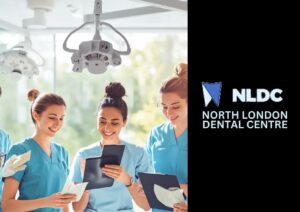
Top Skills North London Dental Practices Seek in Trainee Nurses
Modern dental practices rely heavily on skilled dental nurses who can support clinical workflows, reassure patients, maintain hygiene standards, and contribute professionally to the overall patient experience.